

Thanks, in part, to Cursor, your engineering team is shipping faster than ever, AI-assisted development is accelerating release cycles, and your product surface area is exploding. Meanwhile, it’s still someone's job to maintain your product tours, which cover maybe 20% of your actual workflows.
Across our customer base, we’ve seen firsthand the “manual product tour trap.” (As an aside, I’ve had mixed feelings about manual product tours, but I’ve seen how effective they can be when deployed well. The problem is that they’re failing short in the new world of AI-generated code).
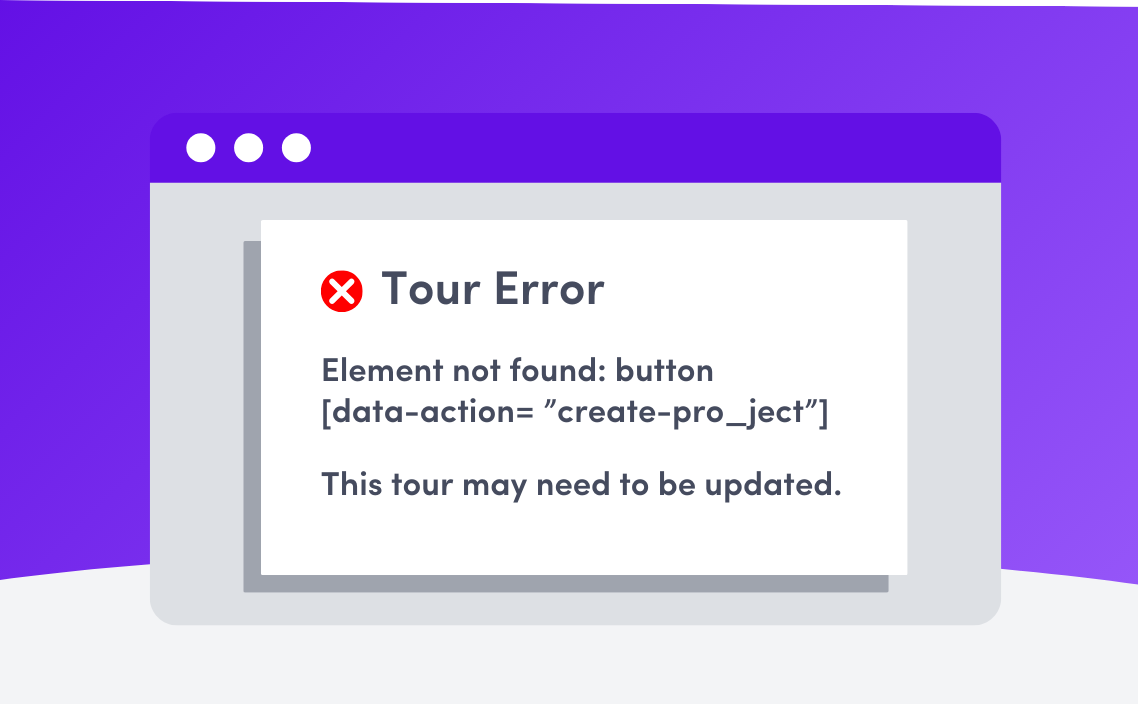
If you're a PM or growth lead reading this, you already know I'm right. You've lived through the pain of painstakingly finding a stable selector only to find it’s not so stable after all.
But as reasoning models get better at writing code, there’s a whole set of downstream consequences.
I’d argue we're in the middle of three massive market shifts, all happening at once:
First: Reasoning models are getting really good at reading code. Not just writing it—reading it, understanding it, and translating it into instructions. Tools like Cursor showed us AI can understand codebases. Here’s the insight: if AI can write you code, it can discover workflows from your code.
Second: Code is becoming the source of truth. We're already seeing this with API docs and help centers—why not product tours? Your GitHub repo knows exactly what changed, commit by commit. It's the most reliable way to see what's actually happening in your product.
Third: Agentic browsers are here. Sure, tools like OpenAI's Operator are clunky right now—booking an Airbnb remains an adventure. But the writing's on the wall: agents will start clicking for users. And as a software provider, you'll want to train these systems yourself. You won't want to rely on third-party agents fumbling through your UI.
Product tours are the natural (and dare I say inevitable) bridge from "show me how" to "do it for me."
We ran a proof of concept with a straightforward hypothesis: if AI can read code, it should be able to discover workflows and generate product tours automatically.
We pointed our AI at a codebase—just the code, no DOM scraping, no clicking around—and asked it two questions:
The results:
No human had to click through the flows. No poking around the DOM for a healthy selector. Just an AI agent reading code and understanding what matters
We built two ways to create tours because different moments call for different approaches:
Connect your GitHub repo. Our AI reads your codebase, discovers workflows, and drafts complete tours for you. You can review, approve, publish. That's it.
It's like having a product expert who's read every line of your code and knows exactly what your users need to learn.
Sometimes you want to show the AI exactly what ought to happen in your product. Use our Chrome extension to click through a workflow once—just once(!)—and we'll capture every step, every click, every page change. The AI marries what it already knows about your product with the click actions and builds the complete tour for you.
Teach a man to fish? Teach an agent how your product works.
Let's get practical. What changes when product tours build themselves?
Manual approaches typically cover 20% of actual workflows simply because building and maintaining more isn't viable. For every 20 human-maintained workflows, AI agents can discover and maintain 80+ workflows. Think about it: There’s a huge tail or different user journeys are valid, but aren’t feasible to put into a manual product tour. Products are like maps, there are a lot of possible destinations and routes to get there. If you’ve ever watched user sessions, you know just how many different routes users will take.
AI Tours don't just build themselves—they maintain themselves. This is the most important point.
When your engineering team ships changes, our AI detects them in your repository. When selectors shift or UI elements move, the system auto-repairs them. When users go off-route during a tour, the system offers them guidance to get back on track. As your engineering velocity increases, the cost to maintain product tours decreases. The more coverage you have and the faster you ship, compound this problem. In a world of 20 tours, maintenance is annoying. In the world of 80+ maintenance is a full time job. And your team probably has other things to do.
To me, product tours are the natural stepping stone for agentic workflows. Agentic workflows are high risk. If they click the wrong thing, it’s a bad user experience. Your product tours, which are lower risk and higher volume, become the training data agents need to know what to click with high reliability.
Here’s the big vision: product tours are how we get from showing users how to do something, to having AI do it for them. This is how you build an agentic workflow.
We've been testing this with early customers, and the feedback has been fascinating:
The biggest surprise? The value of workflow discovery."Teams are finding workflows they didn't even know they should be teaching. The AI isn't just saving time—it's revealing gaps in coverage that were invisible before.
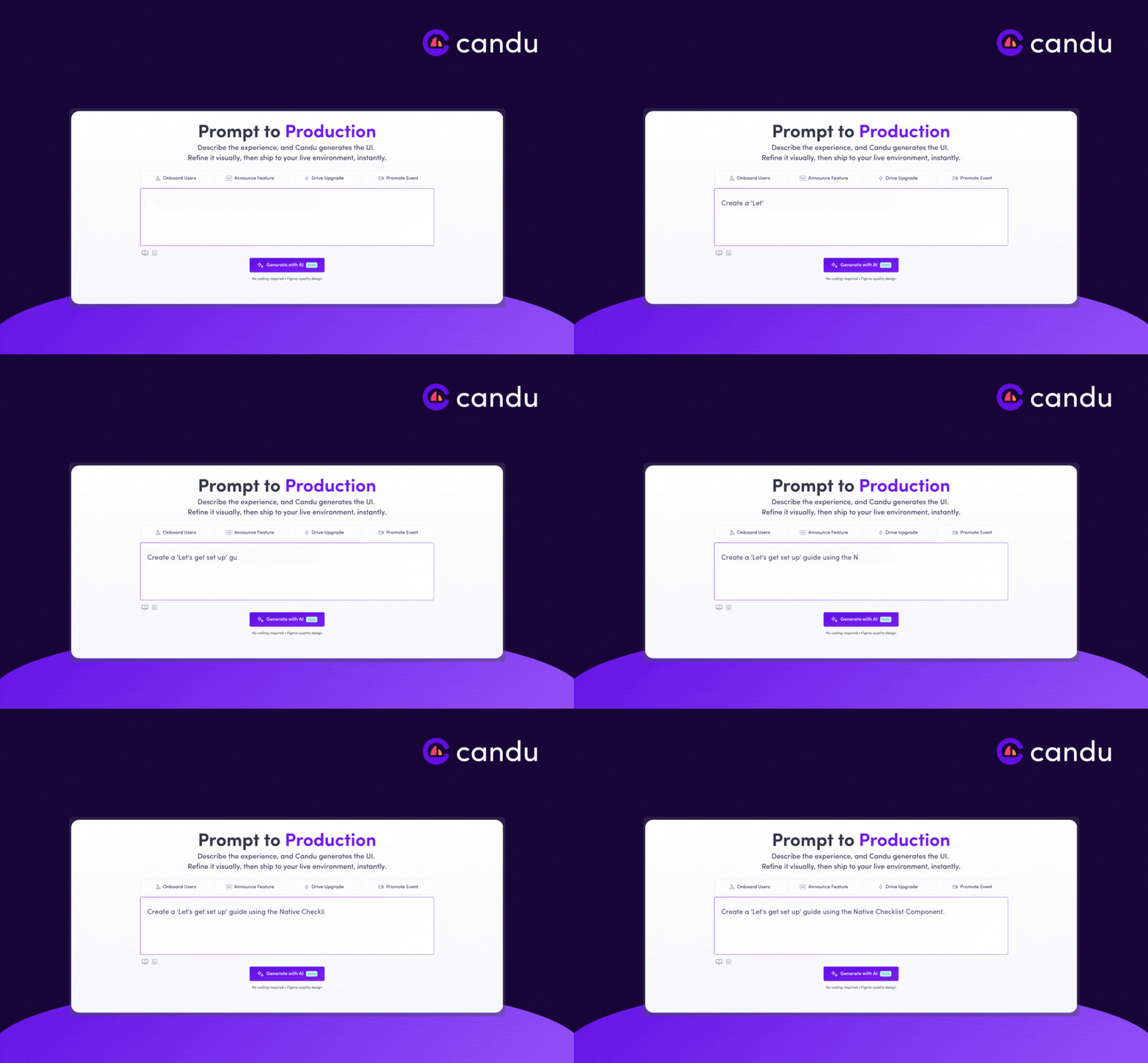
See how Capture Flow goes from one workflow recording to a fully built tour in minutes. Learn more →


.gif)