

In 2019 when I started Candu, I couldn’t figure out why engineers were still coding buttons. In 2025, we started to ask: why would anyone?
As engineering teams lean into faster and faster development with tools like Cursor, product experiences are going to need to fundamentally transform to keep up.
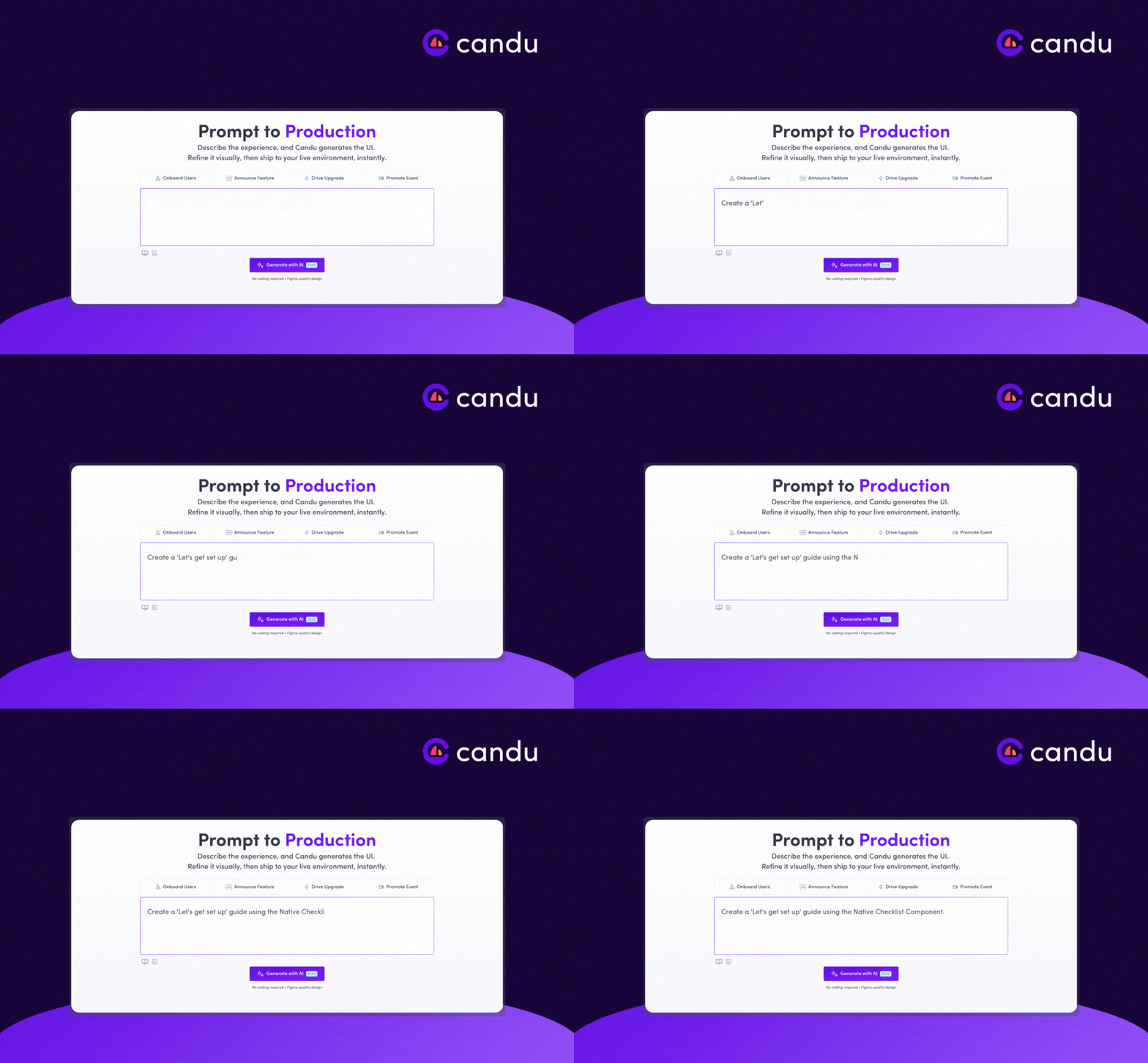
Twelve months ago, if you wanted to build an upgrade banner, you'd spend a couple hours in our editor. Today? You describe it or attach a screenshot, and our AI builds it in seconds. We’re not making a bet that AI will get you all the way there. You’ll still want to finesse in our drag-and-drop Editor. The bet is that they could dance together.
The technical leap? Reasoning models coupled with tooling calls. It’s the difference from here’s an LLM spitting out some gobbledegook text to "I understand what your intent, let me spin up a production-ready mock.”
While building this future, we also hit a big milestone for us: Candu reached profitability.
Not by cutting corners, but by focusing on what we do best: enabling our customers to build and iterate on UX that doesn’t just look beautiful, they create value. This discipline means we innovate from strength, and have the time to build products we want to see built (and take some bigger leaps).
The foundations we laid:
This year's breakthroughs came from watching how the best teams actually work:
Our most-read insights:
The pattern? AI isn’t just changing how quickly we can build a banner, it’s fundamentally reshaping our ambition for what we can build, and for what a savvy operator can achieve with the right tools and imagination.
Here's what we haven't talked about yet: everything we've built has been preparing for one launch.
Early 2026, we're introducing Code-to-Tour, product tours that write themselves by reading your codebase. You've probably clocked that agents are very good at writing code, but they're even better at reading and comprehending it. Our agents discovered 80+ critical workflows in a production repo, then built all the product education automatically: tours, checklists, release notes. No manual mapping. No brittle selectors.
You’ll want to refine it, of course, that’s what Candu’s editor is for, but you shouldn’t need to stare at a blank page or hunt in the console for a stable selector.
Next month, we're publishing our manifesto: "The Death of Manual Product Tours." Because when code changes daily, documentation that doesn't self-heal is already obsolete.
None of this happens without the right people.
We started the year with a dawning understanding that AI could help us build a banner. We're ending it having built something bigger: an AI that understands your product in full, then builds the essential experiences for you.
The best part? We're just getting started.
2025 was about proving the impossible—that AI could actually build production-ready UI. 2026 is about making manual UI creation feel antiquated.
Want to see what we mean? Watch me build an upgrade banner in 60 seconds, switching between prompting and editing like they were always meant to work together.
Because they were.
Long live no-code,
Jonathan Anderson
Founder & CEO, Candu
P.S. If you're tired of your product tours breaking every sprint, grab our Copilot beta. The future doesn't build itself. Actually, wait... now it does.



.png)